
Brewing Sustainability: How KENET Research Grant Is Advancing Solar-Powered Tea Withering Solution
Tea has long been one of Kenya's economic success stories. As the leading agricultural export and the country's second-largest foreign exchange earner, the tea industry supports millions of livelihoods, including smallholder farmers, factory workers, transporters, and exporters.
One of the most critical stages in tea processing is withering, where freshly plucked leaves are gently dried using a continuous flow of warm air. In most Kenyan tea factories, this heat is generated by wood-fired biomass boilers. While this approach has served the industry for decades, it contributes to deforestation and greenhouse gas emissions. This has heightened the need for cleaner, more sustainable energy solutions for tea processing.
Dr. Godfrey Kabungo, a Chemical Engineering Lecturer at Dedan Kimathi University of Technology (DeKUT), is developing a solar-powered solution for tea withering in a project titled “Green energy for tea processing: development and testing of a solar-powered solution for the tea withering process.” The project aims to replace conventional biomass heating with solar energy and, therefore, reduce carbon emissions and pressure on forest resources.
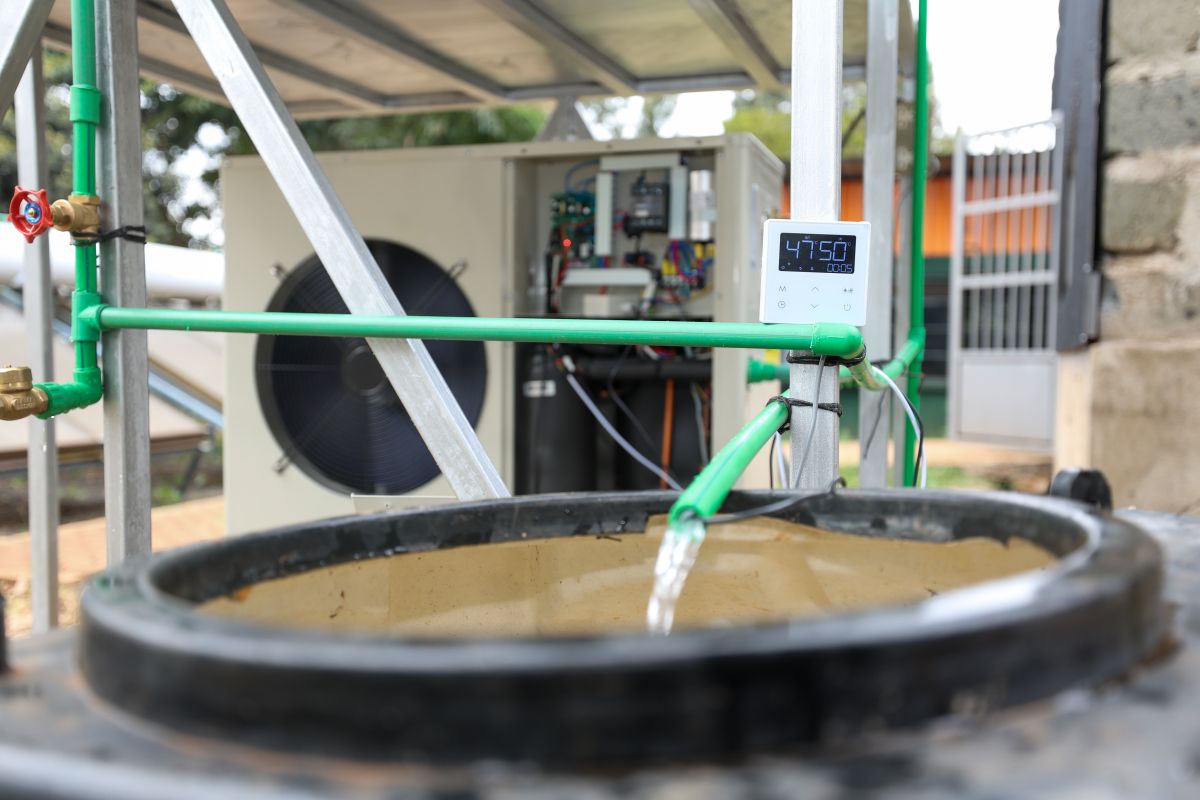
Part of the solar-powered tea withering pilot project at the Centre for Energy Studies at Dedan Kimathi University of Technology (DeKUT).
“When we think in terms of tea processing, the major energy requirement is usually thermal energy, which is traditionally provided by burning firewood in boilers. If we can offer a solution that replaces the amount of firewood used in the industry with greener alternatives such as solar-powered systems, then we can help green the entire value chain,” noted the Lecturer.
Dr. Kabungo benefited from a Ksh. 1.5 million KENET Research Grant in the FY 2024/2025 under the Engineering Special Interest Group (SIG) academic area. The grant facilitated setting up of the pilot project at the institution’s Centre for Energy Studies, including purchasing of the necessary components such as solar panels, heat pump, batteries, inverter, withering trough, water tanks, etc.
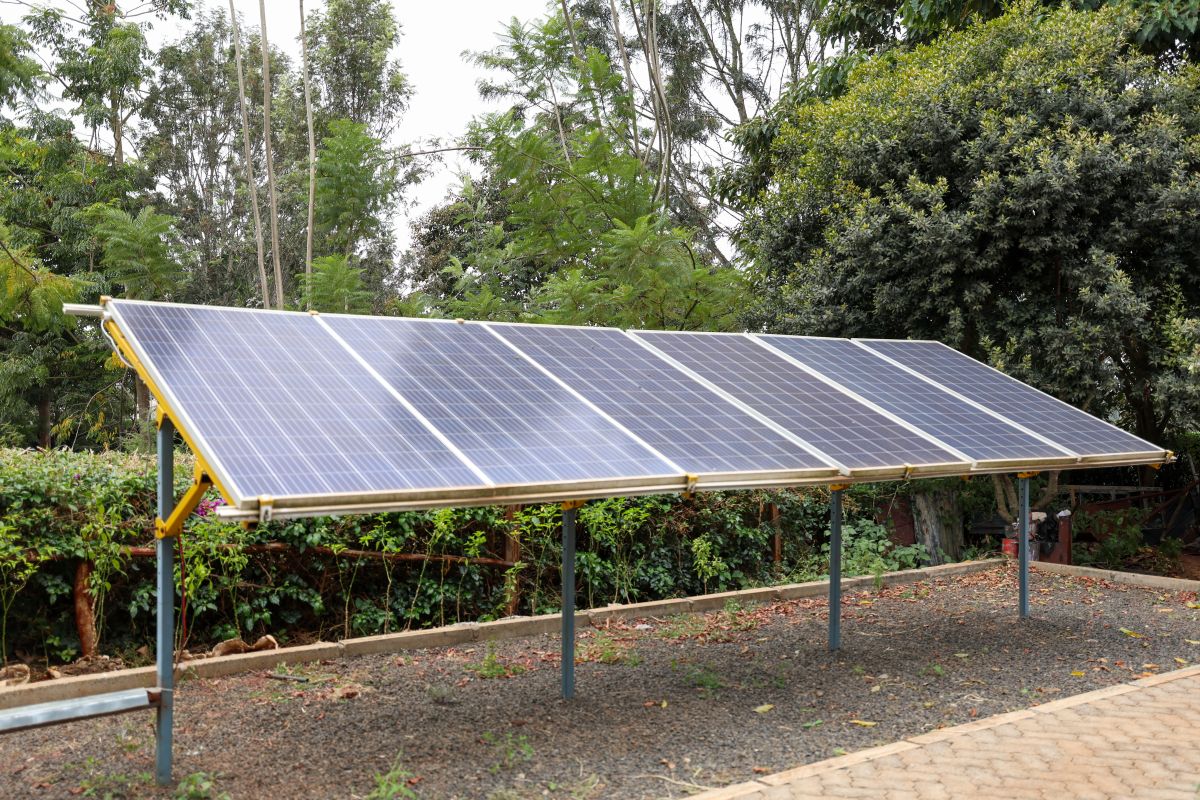
Solar panels powering the pilot project at the Centre for Energy Studies at Dedan Kimathi University of Technology (DeKUT).
He further hailed the research forums organized by KENET, noting that they provide a valuable platform for researchers to connect, receive mentorship on grant management, and engage with fellow grantees. He observed that these interactions offer an opportunity to learn from the experiences of researchers across different universities, including the methodologies they employ, the challenges they encounter, and how they overcome them.
Dr. Kabungo commended KENET for believing in researchers and helping to transform their ideas from paper into practical, real-world solutions. “Even though we had completed our designs, we still needed to build the system because it is through building that stakeholders are able to come and see for themselves that what we are talking about can work. KENET has given us the opportunity to do that,” he added.
Looking into the future, the lecturer expressed optimism that the pilot plant will serve as an important learning resource for students at the University. Instead of relying solely on classroom theory, students will have the opportunity to see industrial equipment and processes in action, helping them better understand how the concepts they learn in class are applied in real-world manufacturing.