
Cybersecurity Capacity Building Gains Momentum with KENET’s Third Regional Training in Central & Eastern Kenya
Kenya Education Network (KENET) held its third Regional Cybersecurity Training for the member institutions in the Central and Eastern Region from February 23rd to February 27th, 2026, at Abai Lodges and Spa in Kirinyaga County. Funded by ICANN, the training brought together 75 participants from 41 KENET member institutions, making it the best-attended event in the series to date. The participants included System Administrators, Network Administrators, and ICT Support Staff who took part in a five-day intensive workshop.
The combined expert-led sessions, hands-on exercises, and interactive discussions, trainees were exposed to emerging cyber risks and contemporary approaches to cyber security within institutional networks.
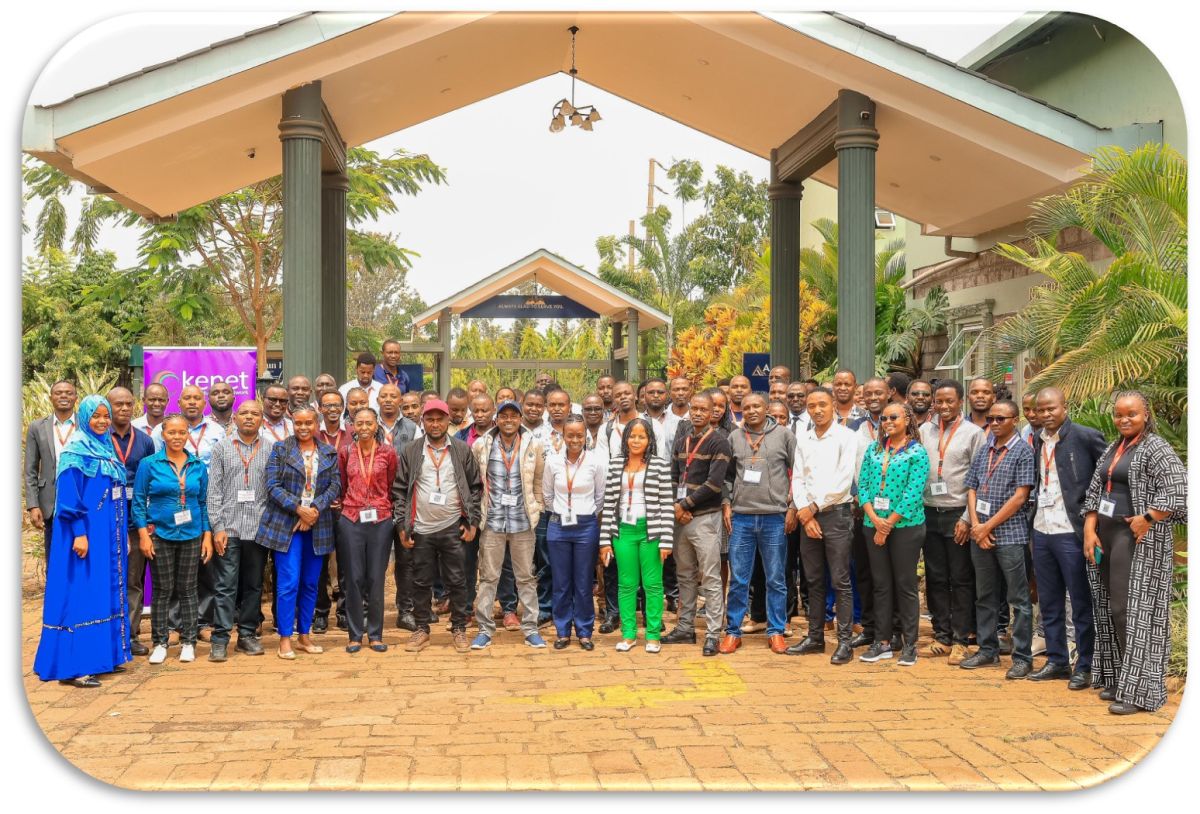
Group photo for the trainers and trainees at Abai Lodges & Spa, Kirinyaga County
The training was officially opened by Mr. Alfred Kipruto, KENET Lead for Digital Enterprise Services and Quality Assurance Lead for the ICANN Training project. In his opening remarks, Mr. Kipruto underscored the growing importance of cybersecurity within Kenya's higher education and research institutions, and reaffirmed KENET's commitment to equipping member institutions with the knowledge and tools needed to protect their digital infrastructure.
The workshop was structured around two concurrent tracks running throughout the five days. Track 1 focused on securing institutional domains, email systems, and authentication systems, while Track 2 addressed securing campus networks and IT assets. Together, the two tracks aimed to give participants a comprehensive and practical grounding in identifying cybersecurity vulnerabilities and implementing effective solutions across their institutions.
Participants left the training with skills they were ready to apply immediately. Millycent Machwenu, an ICT Officer at Kirinyaga University, described the value she found in learning about Federated Identity Management (FIM), a framework that allows users to log in once and access multiple institutional systems such as staff and e-learning portals. She also highlighted the importance of proper DNS configuration in strengthening an institution's cybersecurity posture.
"I have gained valuable insights into the proper configuration of the Domain Name System, which is critical for strengthening cybersecurity. The training helped me identify and address gaps in my skill set."
- Millycent Machwenu, ICT Officer, Kirinyaga University
Purity Kimanthi, a Networking Trainer at Nuu Technical and Vocational College, said the training filled a gap in professional development that her institution had not been able to address on its own.
"This training will enhance my knowledge and help retool my skills in the field. Since my institution has not had the opportunity to facilitate my retooling, this training will effectively serve that purpose."
-Purity Kimanthi, Networking Trainer, Nuu Technical and Vocational College
Prof. Mary Ndung'u, Vice Chancellor of Kirinyaga University, served as the Guest of Honour at the workshop. She delivered the keynote address and presided over the closing ceremony, commending KENET and ICANN for the training initiative and situating it within the current cybersecurity landscape in Kenya.
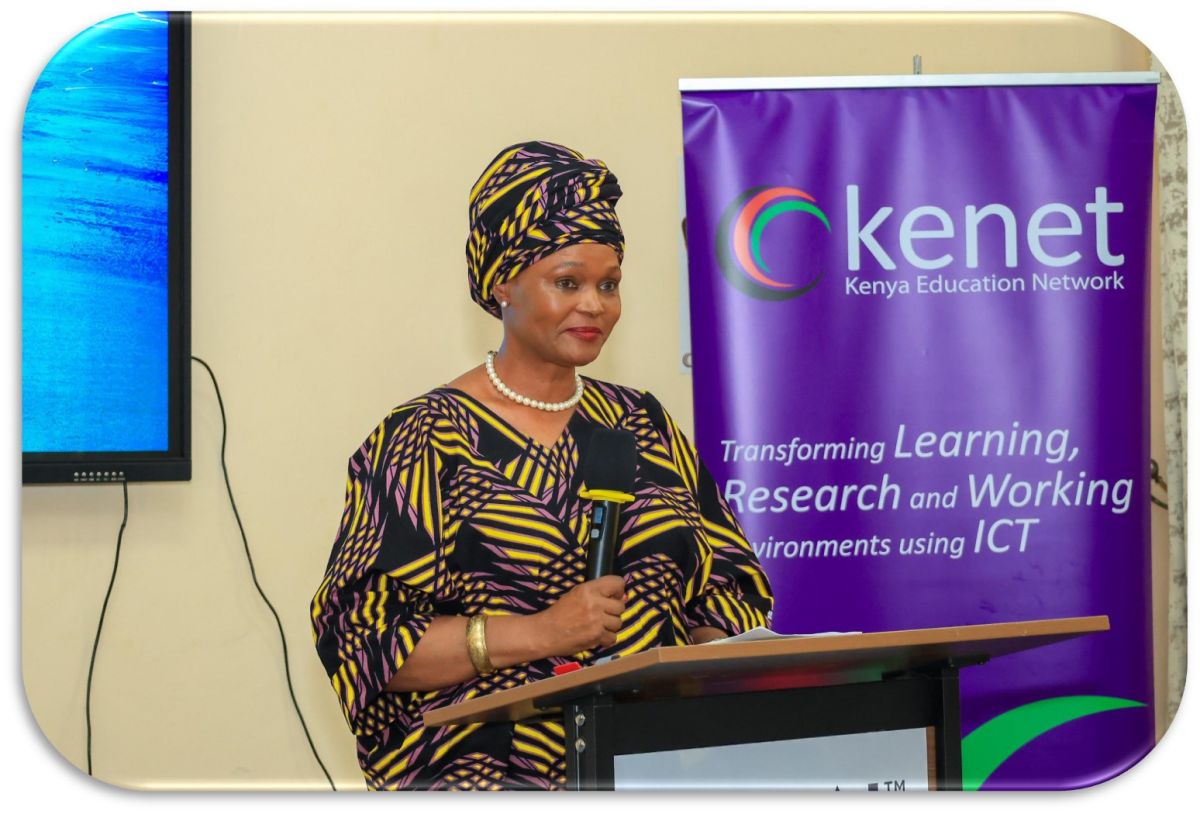
Guest of Honour and Kirinyaga University Vice Chancellor Prof. Mary Ndung’u addresses the trainees at the workshop.
Prof. Ndung'u noted that cyber threats in the country have grown significantly in recent years, with higher education institutions among those affected. She pointed to a rise in phishing and email spam attacks targeting end users, an increase in DNS-related attacks recorded between 2023 and 2025, and a widespread lack of adequate digital identity protection across institutional domains.
"Cyber threats continue to evolve and increase exponentially over the recent past. Kenya as a country has experienced phishing and email spam attacks targeting end users, alongside a significant increase in DNS-related attacks between 2023 and 2025. Additionally, many situations lack adequate digital identity protection, with numerous domains missing critical security records needed to prevent spoofing and spamming."
- Prof. Mary Ndung'u, Vice Chancellor, Kirinyaga University
She encouraged participants to take the learning further by conducting internal cybersecurity reviews at their institutions, implementing the security controls covered during the training, sharing the materials with colleagues who were unable to attend, and championing cybersecurity investment at the management level.
The Central and Eastern Region training is the third in the series, following successful sessions in the Nairobi and Western regions. Two further training sessions are planned for the Coast and Nyanza regions to complete the programme, ensuring broader national coverage and impact.
Through this two-year programme, KENET aims to train 500 ICT professionals through in-person sessions in the first year and a further 1,000 in the second year, through online self-paced sessions, thus building a broad and sustainable base of cybersecurity capacity across Kenya's education and research institutions.