
Cybersecurity Capacity Building Gains Momentum with KENET’s Third Regional Training in Central & Eastern Kenya
Kenya Education Network (KENET) held its third Regional Cybersecurity Training for the member institutions in the Central and Eastern Region from February 23rd to February 27th, 2026, at Abai Lodges and Spa in Kirinyaga County. Funded by ICANN, the training brought together 75 participants from 41 KENET member institutions, making it the best-attended event in the series to date. The participants included System Administrators, Network Administrators, and ICT Support Staff who took part in a five-day intensive workshop.
The combined expert-led sessions, hands-on exercises, and interactive discussions, trainees were exposed to emerging cyber risks and contemporary approaches to cyber security within institutional networks.
KENET Conducts its Second Regional Cybersecurity Resilience Training in Eldoret
KENET conducted its second regional cybersecurity training at Boma Inn, Eldoret, from 26th to 30th January, 2026. The five-day hands-on workshop brought together 52 ICT specialists drawn from 30 KENET member institutions. The ICANN-grant funded workshop aimed to equip trainees with the knowledge and practical skills required to protect institutional networks, systems, and data from evolving cyber threats. It featured two concurrent training tracks designed to address both infrastructure and service-level security needs. Track 1 covered Securing Institutional Domains, Emails, Websites and Identity Systems, while Track 2 focused on Securing Campus Networks and IT Assets.
The Importance of a Rubric for Assessing the Quality of Teaching Materials for eLearning in Higher Education
Faculty face the challenge of delivering engaging, effective, and equitable content to diverse students often across eLearning platforms.
Empowering ODeL Teams in Digital Learning Design and Moodle LMS Administration
KENET conducted a five-day capacity-building workshop for ODeL teams, which included eLearning heads, instructional designers, Moodle site administrators, and ICT staff supporting digital learning from 19th to 23rd January 2026 at the KENET Training Room.
The training was delivered in two phases: Multimedia Content Design for eLearning and Moodle System Administration & Management. In the first phase, Multimedia Content Design for eLearning, participants learned and practiced how to create engaging and interactive online learning materials. They explored techniques such as mind mapping and storyboarding, applied multimedia principles, and used tools including Canva, PowerPoint, OBS, Audacity, elevenLabs, and HandBrake to produce images, audio, and videos for eLearning. Participants also learned how to package this content for the LMS by applying advanced course creation techniques, adding activities such as assignments, administering quizzes using Safe Exam Browser and other proctoring solutions, and providing learner support while ensuring digital accessibility. By the end of this phase, participants were confident in designing, managing, and delivering interactive, accessible, and learner-centered courses on Moodle.
The second phase, Moodle System Administration & Management, focused on backend administration of the Moodle LMS platform. Participants were taken through key technical areas, including system security, backup and recovery procedures, platform optimization, and a recap of Linux fundamentals. By the end of this phase, participants were confident in managing the Moodle system efficiently and securely.
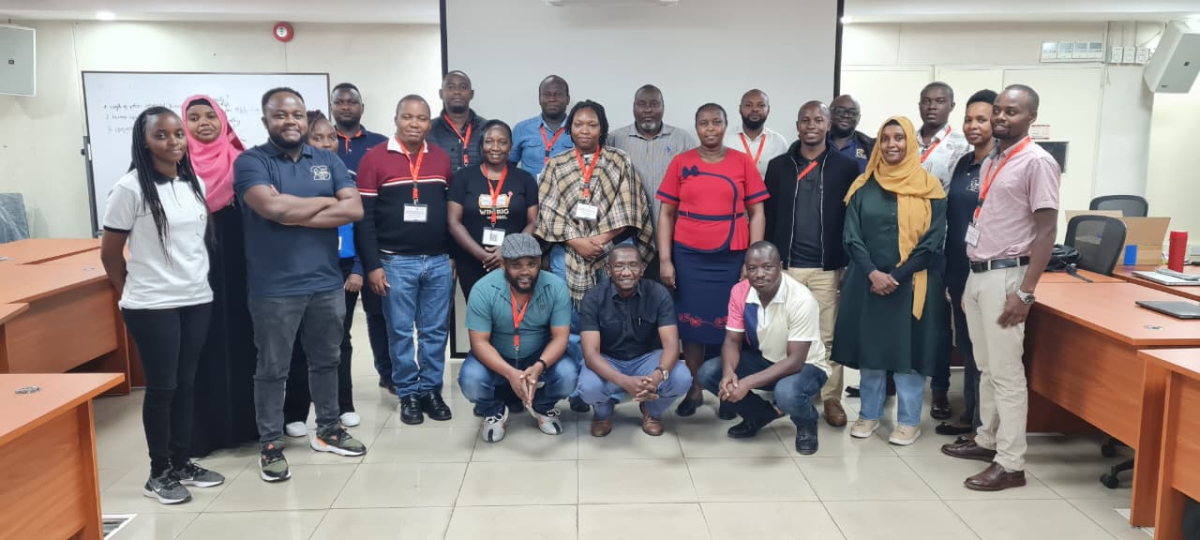
Participants and trainers pose for a group photo at the KENET training room
Mr. Michael Ouru, LMS and Media Services Officer at KCA University, described the training as highly professional, impactful, and practical, highlighting the quality and depth of the content delivered. He said: “As both an instructional designer and an IT professional, the program significantly sharpened my skills. The instructional design component was accurate, relevant, and deeply enriching. On the system administration part, the training was thorough, objective, and strongly action-oriented, equipping us with practical skills that can be immediately applied within our institutions. The credibility of the content reflected a genuine commitment by KENET to support member institutions. Overall, this was not training for the sake of it, but a purposeful capacity-building initiative.”
Mr. Paul Kihara from Dedan Kimathi University of Technology (DKUT) noted that the training helped him realize that creating interactive digital content does not require sophisticated or expensive subscriptions. He observed that making use of freely available and open-source tools can be an effective solution for institutions operating under tight budgets.
KENET Holds its inaugural In-Person ICANN Grant Funded Cybersecurity Resilience Training
In November 2025, KENET launched the first in a series of regional cybersecurity trainings in Nairobi, supported by the ICANN Grant Program. The five-day workshop that was held from November 3rd- 7th, brought together 47 participants from 27 member institutions. These included universities, TVETs, teaching hospitals, and capacity-building institutions affiliated with education and research across the Nairobi region. Participants were nominated by the heads of ICT at their respective institutions.
Member Institution List and Regional Mapping for ICANN Grant Funded Training
Guidelines for Achieving Accessibile and Inclusive eLearning for Education Institutions
As eLearning increasingly becomes an integral part of education delivery, ensuring that is accessible and inclusive is not only a matter of compliance, but also of equity and effectiveness. Accessibility in eLearning is about making content usable for individuals with disabilities, while inclusion involves designing learning experiences that accommodate diverse needs and preferences. Together,these principles help create educational environments where all learners, regardless of their abilities or backgrounds, can fully engage with and benefit from the content.
Leveraging Open-Source Solutions for Dynamic eLearning
As institutions increasingly adopt digital transformation, the demand for high-quality, interactive learning experiences continues to rise. However, many face budget constraints that limit their ability to invest in costly proprietary software or specialized tools. This is where open-source solutions come in. These tools provide faculty with flexibility, cost-efficiency, and community support needed to create engaging, interactive, and accessible eLearning courses. Here’s how open-source resources are reshaping the way we teach and learn.